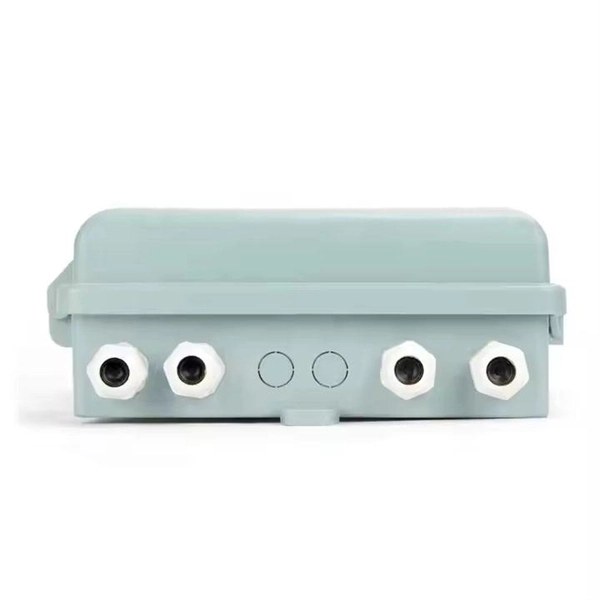
Factory electrical distribution boxes enhance safety, power management, and operational efficiency in industrial environments.Project Overview
In modern manufacturing facilities, outdated electrical systems often cannot support the growing number of sensors, actuators, and control devices required for automation. For example, a large automotive plant in Germany upgraded its production lines by installing over 200 smart devices, necessitating a robust and flexible distribution system. The engineering team selected TSM-Series Distribution Boxes, deploying 18 units across the facility to handle increased connectivity and harsh industrial conditions .
Key Functions and Benefits
Safety Protection: Distribution boxes provide essential electrical protection, including circuit breakers, overvoltage, undervoltage, and leakage protection. This ensures circuits can quickly cut off power during overloads or faults, preventing accidents and equipment damage . Power Monitoring and Distribution: Modern distribution cabinets are equipped with energy meters and current transformers to monitor electricity consumption for each load. This allows operators to detect anomalies and adjust power distribution in real time, improving efficiency and reducing energy waste . Equipment Control: Distribution boxes integrate with control systems to operate mechanical equipment such as motors, enhancing production efficiency and safety. They can manage multiple devices simultaneously, centralizing control in a single enclosure . Ease of Operation and Maintenance: Clear labeling, modular layouts, and accessible components make distribution boxes user-friendly. Maintenance teams can quickly identify and resolve issues, minimizing downtime . High Integration and Scalability: These cabinets consolidate switchgear, protective devices, and measuring instruments in a compact enclosure. Modular designs allow for easy expansion or modification to meet evolving production demands . Data Monitoring and Analysis: Advanced distribution boxes can interface with computer systems for real-time monitoring and data analysis, supporting intelligent management and predictive maintenance .
Implementation Approach
The installation process typically follows a phased approach to minimize disruption. In the German automotive plant case, the modular TSM boxes allowed installation alongside ongoing production, ensuring minimal downtime. Coordination with wiring and control systems ensured seamless integration .
Measurable Outcomes
- Improved Safety: Built-in protection modules reduced the risk of electrical accidents.
- Operational Efficiency: Centralized control and monitoring improved production line responsiveness.
- Energy Optimization: Real-time monitoring helped identify and reduce energy waste.
- Project Success: The German plant completed the automation upgrade ahead of schedule, standardizing TSM boxes for future expansions .
Global Applications
Distribution boxes are widely used in industrial automation, healthcare facilities, and large-scale construction projects. For instance, a healthcare campus in Riyadh deployed 127 custom distribution boxes with redundant power paths and temperature sensors, ensuring uninterrupted operation of critical units like ICUs and operating theaters . Similarly, general-purpose control boxes are used globally for dosing units, PCB mounting, and other industrial applications, demonstrating versatility and reliability .
Conclusion
Factory electrical distribution boxes are critical for modern industrial operations. They provide safety, efficient power distribution, equipment control, scalability, and intelligent monitoring, making them indispensable for automation upgrades and large-scale projects. Proper selection, modular design, and integration with control systems ensure long-term reliability and operational excellence.