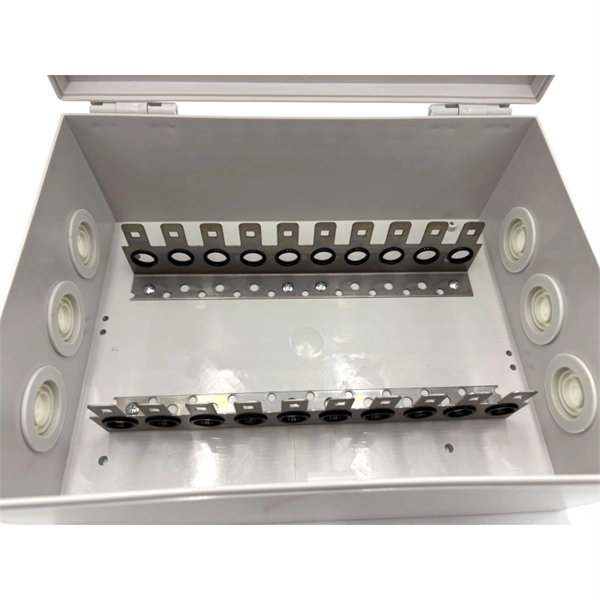
A distribution box is constructed with a protective enclosure housing bus bars, circuit breakers, fuses, and other components to safely distribute electrical power to multiple circuits.Enclosure and Materials
The enclosure forms the outer shell of the distribution box, providing mechanical protection, insulation, and fire resistance. It is typically made from engineering thermoplastics such as Polycarbonate (PC) or Acrylonitrile Styrene Acrylate (ASA) for residential use, or metal materials like stainless steel or galvanized steel for industrial and outdoor applications . The enclosure may have an IP rating to protect against dust and moisture, ensuring safe operation in different environments.
Internal Components
Inside the distribution box, the main components include:
- Bus Bars: Conductive strips made of copper or aluminum that distribute electricity from the main input to multiple circuits. Bus bars provide reliable connections with low contact resistance .
- Circuit Breakers and Fuses: Protective devices that interrupt power in case of overload or short circuits, safeguarding both equipment and users .
- Incoming Line Part: The section where the main power enters the box, which may include single or multiple incoming lines, often labeled with rated current and breaker specifications .
- Dual Power Switch (if applicable): In systems with backup power, this switch automatically transfers load to a secondary supply when the main supply fails .
- Indication Lights and Monitoring Units: Visual indicators for mains status and, in smart DB boxes, energy monitoring and communication modules for remote control and data collection .
Functional Layout
The internal structure is designed to organize circuits safely, provide overload and short-circuit protection, and allow easy maintenance. Components are arranged to maintain proper spacing, prevent accidental contact, and ensure efficient heat dissipation . The layout may vary depending on the type of DB box:
- Surface Mounted: Installed on walls, suitable for retrofits and industrial environments .
- Flush Mounted: Embedded in walls for aesthetic purposes, common in residential and commercial buildings .
- Pole Mounted: Designed for outdoor utility applications .
Summary
The construction of a distribution box is based on a combination of robust enclosure materials, organized internal components, and protective devices to ensure safe, reliable, and efficient power distribution. Proper design considers mechanical strength, insulation, fire resistance, and accessibility for maintenance, making the DB box a central and essential element of any electrical system .